ADHD & the Intersection of
Self-Identity
A 12-week Support & Skills Group for Neurodivergent Individuals
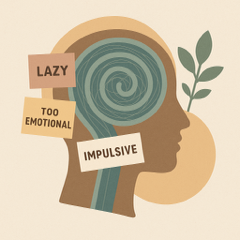
This group is for individuals diagnosed with ADHD and other forms of neurodivergence who want to explore how their diagnosis intersects with their sense of self. Many people with ADHD have internalized harmful labels — “lazy,” “unmotivated,” “too emotional” — that can distort self-perception and hinder growth. This group provides a space to unpack those narratives and reconnect with your authentic identity.
Over 12 weeks, participants will engage in both process-oriented discussions and skills-based coaching. Together, we’ll examine the stories others have told us, challenge internalized stigma, and develop tools for emotional regulation, time management, and self-compassion. The goal is to build a more accurate, affirming self-understanding — grounded in your strengths, not stereotypes.
Week 1 – Introduction & Lived Experience
Identify how ADHD / neurodivergence has impacted your life. Reflect on early experiences, strengths, challenges, and patterns while establishing group norms and safety.
Week 2 – Labels & Internalized Narratives
Examine the labels others have imposed because of neurodivergence. Understand how these messages shape self-concept, shame, expectations, and identity over time.
Week 3 – Masking & Authenticity
Recognize how masking appears across different environments and relationships. Understand how masking impacts energy, identity, connection, and the ability to feel authentic and understood.
Week 4 – Spoon Theory & Energy Use
Identify which experiences drain emotional, cognitive, and physical energy. Learn to notice patterns in energy use without judgment while navigating a world that often demands neurotypical functioning.
Week 5 – Rejection Sensitivity Dysphoria (RSD) & Describing Emotions
Understand RSD as a visceral nervous system response rather than a cognitive choice. Learn how emotions such as RSD can feel out-of-body or overwhelming, making them harder to regulate in the moment. Use the DBT model for describing emotions to better identify how rejection sensitivity impacts the body, thoughts, urges, relationships, and identity.
Week 6 – Pervasive Drive for Autonomy & Choice Anxiety
Examine the concept of a pervasive drive for autonomy and how pressure, expectations, and loss of control can trigger nervous system responses. Identify how choice anxiety, avoidance, paralysis, and overthinking become interconnected responses to overwhelm.
Week 7 – Time Blindness & Executive Dysfunction
Understand how time blindness and executive dysfunction impact daily life. Examine task initiation, procrastination, overwhelm, and shame around productivity without reducing these experiences to laziness or lack of effort.
Week 8 – Mindfulness & Coping with Executive Dysfunction
Learn mindfulness skills from DBT as practical tools for coping with executive dysfunction and emotional overwhelm. Practice noticing avoidance patterns without judgment while returning attention to the next effective step.
Week 9 – ADHD Communication, Relationships & Dialectics
Examine how ADHD and neurodivergence impact communication, workplace dynamics, friendships, and romantic relationships. Explore dialectical tensions between accountability and self-compassion while learning DBT interpersonal effectiveness concepts.
Week 10 – Coping with the Emotional Experience of ADHD
Build on DBT emotion regulation foundations to better understand emotional intensity, overwhelm, shame, rejection sensitivity, and burnout. Learn to view emotional experiences like a kaleidoscope rather than an absolute truth while practicing skills that increase choice in emotional response patterns through small, repeatable actions over time.
Week 11 – Balancing Self-Acceptance & Change
Understand the DBT dialectical framework of acceptance and change. Examine how growth becomes more sustainable when self-compassion, accountability, and realistic expectations coexist.
Week 12 – Reflection & Closing
Reflect on personal growth, identity, and self-understanding throughout the group experience. Identify how your relationship with ADHD and neurodivergence may have shifted over the course of the group.
Co-led by a licensed clinician and pre-licensed therapist, this group offers connection, validation, and practical strategies for navigating life with a neurodivergent brain.
Please check with your insurance about group coverage since each insurance plan is unique in their coverage. Out of pocket rate is $65/session. If you have questions or are interested in joining, please contact us through email or phone by clicking the button below.
This virtual group will be facilitated by:
Hosted through Zoom